Camel Live 6G Network Future: How the Next Wireless Revolution Will Redefine Football Fandom for 2026 and Beyond
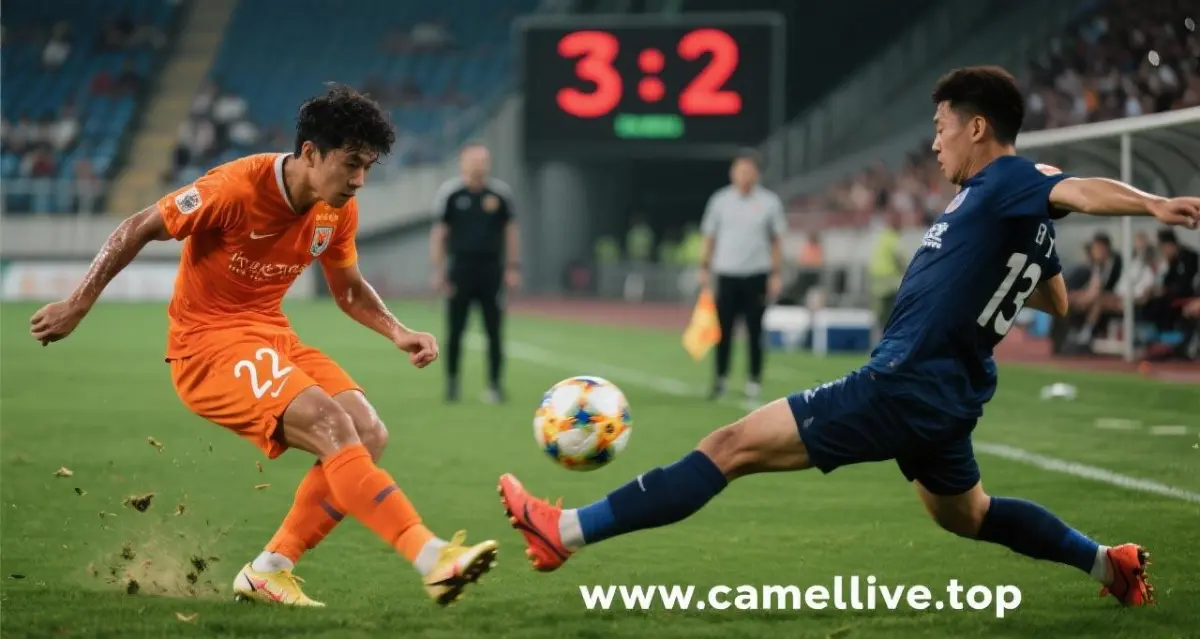
The beautiful game has always thrived on moments of unscripted brilliance: a last-minute winner, a perfectly executed tactical switch, or a dazzling solo goal. For fans, catching these moments live—feeling the collective gasp and roar—is the essence of football fandom. Today, this experience is constrained by the limits of our networks. Tomorrow, it won't be. As we look ahead to the monumental 2026 FIFA World Cup in North America, the conversation is shifting from "where to watch" to "how immersively can you experience it?" The answer lies on the horizon of the camel live 6G network future, a technological leap that promises to make every fan, everywhere, feel like they're in the front row.
The 2026 Stage: A Connectivity Blueprint
The 2026 World Cup is more than a tournament; it's a massive technology deployment. Across 16 host cities in the U.S., Canada, and Mexico, networks are being fortified to handle unprecedented demand. Verizon, for instance, is undertaking a colossal upgrade at MetLife Stadium—the venue for the Final—installing thousands of new 5G antennas and millions of feet of fiber optic cable to ensure seamless connectivity for fans uploading videos and for critical operational data. Similar large-scale infrastructure projects, like the Wi-Fi 6E and network overhaul at Denver's Empower Field, are setting a new standard for in-stadium experiences.
These efforts lay the essential groundwork. They are the bridge to a future where connectivity is not just about having a signal, but about creating a new reality. According to industry experts, by 2026, the focus for major venues will be on predictable, dedicated private networks that support everything from broadcast operations and security to real-time player performance analytics, moving beyond the limitations of public networks. This evolution is the perfect precursor for 6G.
What is the 6G Future? More Than Just Speed
While 5G Advanced deployments will expand in 2026, the foundational work for the next generation—6G—will accelerate, moving from theoretical research toward defining practical standards. Imagine a network with near-zero latency (as low as 0.1 milliseconds), speeds potentially 10 times faster than 5G, and the ability to connect up to 100 million devices per square kilometer.
For a football fan and a platform like Camel Live Top, this is transformative. It moves beyond simply streaming a match in 4K. The 6G network future enables:
Holographic Viewing & Immersive Reality: Instead of watching a 2D broadcast, you could don lightweight glasses and experience the match from a virtual seat right on the halfway line, seeing plays develop from a player's perspective. With near-instantaneous data transfer, this experience would be perfectly synced with the live action, free from the disorienting lag of current VR.
Real-Time, Multi-Angle Sovereignty: Forget the director's chosen feed. With 6G's immense bandwidth and low latency, you could instantly switch between dozens of camera angles—including augmented reality overlays showing player stats, tactical formations, or real-time speed—without any buffering. You become your own broadcast director.
Ubiquitous, Ultra-Reliable Streaming: Whether you're on a high-speed train, in a crowded city square, or in a remote location, a 6G-powered service like Camel Live Top would guarantee a flawless, high-definition stream of not just the biggest leagues, but all the 2,600+ competitions it covers, making geo-restrictions and dead zones a thing of the past.
The Camel Live Platform: Your Gateway to the Next Generation
At its core, Camel Live Top is about delivering comprehensive, real-time football data and streams to fans wherever they are. The coming 6G network future is the key that unlocks the full potential of this mission. This next-generation connectivity aligns perfectly with our commitment to providing "high-attention, time-bounded moments" of sport, as media trends predict, rather than just a linear schedule.
The 2026 World Cup, with its sprawling geography and 104 matches, will be the first global event to hint at this future. Fans will begin to demand more personalized, interactive, and immersive content. By understanding and preparing for the shift towards AI-driven personalization, energy-efficient streaming, and interactive media, platforms that invest in these technologies today will be the ones that define the fan experience of tomorrow.
Ultimately, the true power of 6G for football is not just in the astonishing technology, but in what it preserves and enhances: the raw, shared, human emotion of the game. It will connect a fan in Jakarta to the tension in a Kansas City stadium with unparalleled intimacy. It will allow friends across continents to celebrate a goal in a shared holographic space as if they were in the same room.
The road to 2026 is more than a countdown to a tournament; it's a journey toward a new frontier in football fandom. The foundations are being laid in stadiums today, and the vision is being crafted in labs around the world. The future is a network—a 6G network future—where every pass, tackle, and triumphant roar is experienced not just seen, and where every fan has the best seat in the house. This is the future that Camel Live Top is being built for.
Disclaimer: Camel Live Top is a platform dedicated to providing football fans with real-time scores, fixtures, and streaming links. The technological concepts discussed in this article represent forward-looking industry predictions for the evolution of connectivity and its potential applications in sports media.