Camel Live Gegenpressing Stats: How High-Intensity Data Will Decide the 2026 World Cup
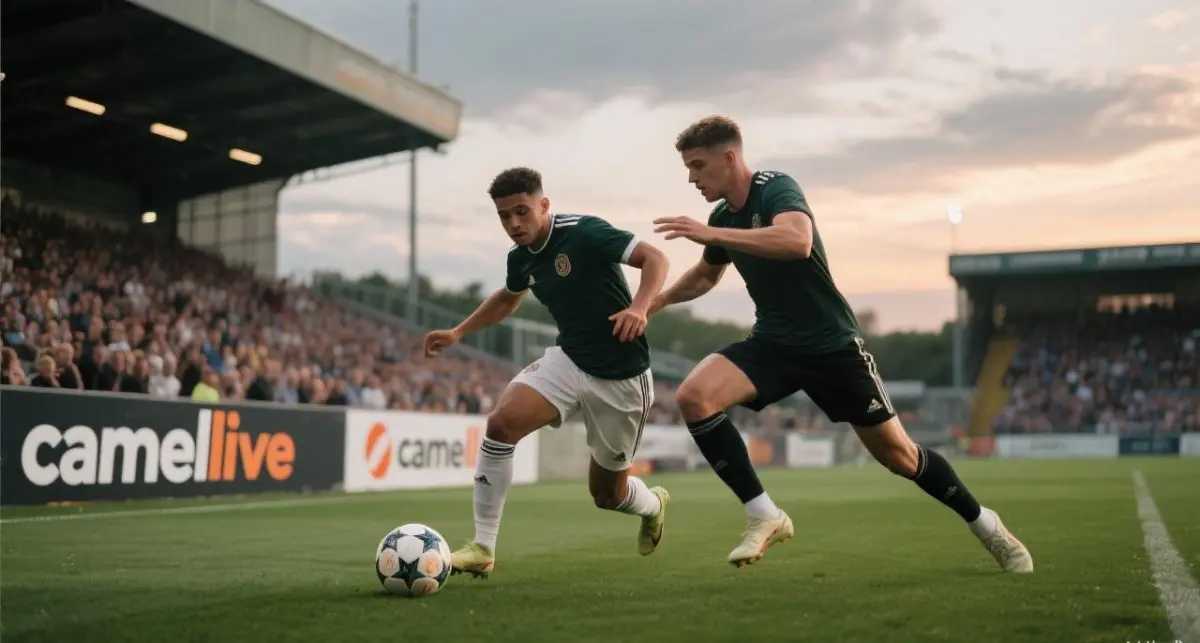
The narrative of modern football is written in moments of chaos—the instant a possession is lost, the frantic six seconds that follow, and the decisive, often brutal, effort to win it back. This is the realm of gegenpressing, a tactical philosophy that has evolved from a signature style into a global standard. As we look towards the historic 48-team 2026 FIFA World Cup in North America, understanding this tactic moves beyond mere observation. It enters the domain of data. The teams that will conquer the expanded tournament will be those that don't just execute the gegenpress, but master, measure, and adapt it through advanced statistics. For the modern fan, platforms like Camel Live are crucial, transforming the raw, high-octane spectacle into intelligible, predictive insights that tell the true story of a match.
Beyond the Philosophy: Quantifying the Chaos
At its core, gegenpressing is a team's coordinated, immediate attempt to regain possession after losing the ball, preventing the opponent from launching a structured attack and instead creating scoring chances from disarray. While popularized by Jürgen Klopp's "heavy metal football" at Borussia Dortmund and Liverpool, its influence is now universal. The key question for analysts and elite teams is no longer if a team presses, but how effectively.
This is where advanced metrics like Gegenpressing Intensity (GPI) become pivotal. GPI is defined as the percentage of times a team immediately attempts to regain the ball after losing it in the attacking 40% of the pitch, rather than retreating. It quantifies the aggressive intent that defines modern top-tier football.
Key Gegenpressing Statistics and What They Measure:
| Metric | Definition | What It Reveals |
|---|---|---|
| Gegenpressing Intensity (GPI) | The % of possession losses in the final third followed by an immediate press attempt within 6 seconds. | A team's tactical commitment to high-risk, high-reward defensive actions. |
| Pressing Efficiency | The % of those press attempts that successfully regain possession within the 6-second window. | The technical skill and coordination of the press, separating busy from effective. |
| Field Tilt Correlation | The strong link (correlation ~0.64) between high GPI and territorial dominance in the final third. | Teams that press high successfully tend to pin opponents back, controlling the game's location. |
| Game State Variance | How GPI changes when a team is winning, drawing, or losing. | A team's tactical discipline and risk appetite. Most teams press more when losing. |
The 2026 Contenders: A Data-Driven Pressing Landscape
The 2026 World Cup will present a unique tactical battlefield. Unlike club teams, which have daily training to perfect complex systems, national teams have limited preparation time, forcing coaches to prioritize adaptable, principle-based tactics like gegenpressing. The expanded format means more matches against varied opposition, making a proactive, controlling style even more attractive.
Several contenders are already building their identities on quantifiably elite pressing data:
Germany, under a tactically progressive coach, will likely leverage their Bundesliga heritage—the league with the most marked increase in GPI over recent seasons. Expect a statistically intense, machine-like press.
Spain and their possession-dominant approach have evolved. Today's top Spanish sides use gegenpressing not just to win the ball back, but to win it back in advanced areas, directly fueling their attack.
The United States and Canada, as hosts, will rely on athleticism and cohesive team spirit. A high-GPI system can be a great equalizer against more technically gifted opponents, turning home-field energy into measurable defensive pressure.
However, the World Cup's single-elimination knockout stage creates a fascinating tension. While the Champions League's two-legged ties can encourage caution, a World Cup knockout match often pushes teams to be more open. This environment could see aggressive pressing strategies either rewarded with glorious turnovers or brutally punished on the counter-attack.
The Physical and Tactical Tightrope
The primary critique of gegenpressing has always been its physical toll. A high GPI is unsustainable over a 50-game club season without elite squad rotation and conditioning. The World Cup's compressed format, however, temporarily suspends this rule. Teams can feasibly employ a maximum-intensity press for seven games, knowing there is ample recovery time between matches. This makes the 2026 tournament the perfect stage for gegenpressing's most explosive manifestation.
The teams that succeed will be those that optimize their press based on deep statistical analysis. They will know when to trigger the press (exploiting an opponent's poor first touch or a pass to a vulnerable player), and where to funnel the play. They will also meticulously manage their GPI based on the game state—perhaps pressing with ferocity while drawing or losing, but adopting a more controlled, efficient press when protecting a lead.
For the football fan, this data layer enriches the viewing experience. Watching a match through the lens of gegenpressing stats allows you to anticipate pivotal moments. You'll see beyond the scoreline to understand the underlying battle: Is one team's midfield successfully playing through the press, or are they being systematically dismantled by calculated pressure? The next goal is often foretold in the steady accumulation of successful high-turnovers.
Conclusion
The 2026 World Cup promises to be a festival of global styles, from South American flair to Asian organization. Yet, the common language of the champions will be spoken in the language of pressure, transition, and data. Gegenpressing has moved from a revolutionary tactic to a fundamental analytical framework. The winners will be those who best translate the chaos of the counter-press into cold, hard, actionable statistics, and then execute that plan with unified intensity. At Camel Live, we track these stories in real-time, providing the stats and analysis that go beyond the highlight reel, right to the heart of how modern football is truly won and lost.
If you would like to focus on how a particular national team (like Germany, Spain, or the USA) might implement this strategy or delve deeper into how tactical styles from different continents clash on this pressing battlefield, I can provide a more focused analysis.