Camel Live: Long Ball Tactic Effectiveness – The Direct Route to Glory in 2026
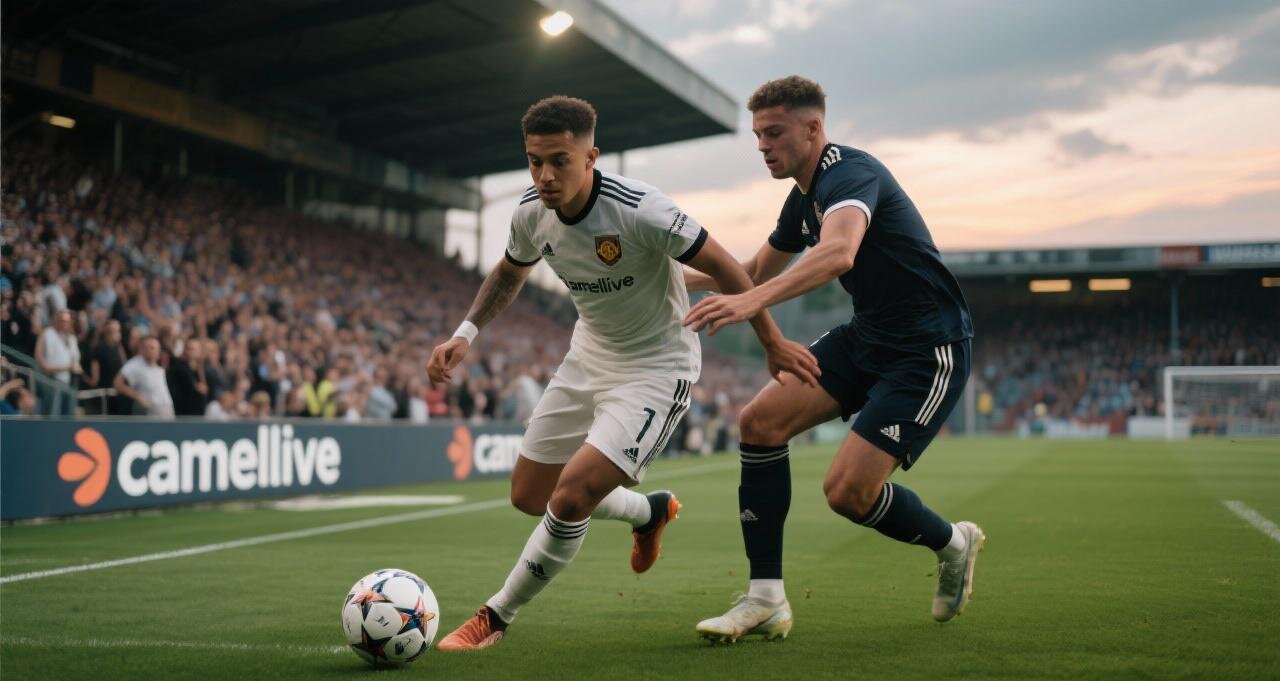
In an era dominated by discussions of possession percentages, high pressing triggers, and intricate positional play, one timeless tactic continues to offer a brutally effective alternative: the Long Ball. Often misunderstood as merely "hopeful" or "primitive," a sophisticated long-ball strategy is a precise weapon of control and transition. As football evolves with increasing athleticism and tactical nuance, the long ball tactic is experiencing a strategic renaissance. For teams and analysts preparing for the pinnacle of 2026, understanding its effectiveness is not about embracing outdated football, but about mastering a direct route to victory in high-stakes environments.
Beyond the "Punt": The Philosophy of Modern Long-Ball Play
The contemporary long-ball tactic, sometimes termed Long Ball Counter (LBC), is a philosophy built on proactive principles, not desperation. Its core objective is to exploit space behind high defensive lines or during moments of transition by bypassing the midfield press with deliberate, vertical passes. This approach prioritizes control in deep areas, compact defensive solidarity, and rapid conversion of defensive wins into scoring opportunities, rather than relying on sustained possession through short passes.
At its best, it is a disciplined system that turns a team's defensive structure into its most potent attacking platform. A successful long-ball play is the culmination of coordinated movement, precise timing from a deep-lying passer, and intelligent runs from forwards who are constantly "reading the space behind defenders".
The Architectural Blueprint: Effective Formations for Long-Ball Success
The effectiveness of the long-ball tactic is profoundly shaped by the team's formation, which must provide defensive stability, effective aerial presence, and outlets for quick distribution. Several formations have proven particularly adept for this style.
The 5-2-1-2 formation is a fortress built for the counter. With three central defenders and two wing-backs, it creates a formidable defensive wall. The two central midfielders are crucial for winning the ball and delivering it, while an attacking midfielder acts as the key link, often playing the decisive long pass to two strikers—one acting as a physical target and the other exploiting space with pace. This formation excels when the opposition leaves space in behind.
For a more balanced approach, the classic 4-4-2 formation offers natural width and simplicity. Its reliability lies in its clear structure: two centre-backs, a flat midfield four, and two strikers. One striker typically serves as the focal point for long balls, while the other pounces on defensive mistakes. The wide midfielders provide support without over-committing, ensuring the team remains compact and ready to transition.
The 3-5-2 formation offers control of the centre and aggressive counters. Three centre-backs secure the defence, allowing wing-backs to advance. A bank of five midfielders overwhelms the central areas, enabling faster ball recovery and distribution. With two forwards—one to hold up play and another to attack space—this formation applies immense pressure during transitional moments.
The 2026 Landscape: Where the Long Ball Will Find Its Feet
The 2026 FIFA World Cup, with its expanded 48-team format and matches across varied North American climates and pitches, presents a unique stage where pragmatic, direct football could thrive. For many nations, particularly those facing technically superior opponents or playing in challenging conditions, a well-drilled long-ball system can be the great equalizer.
We can expect underdog teams and tactically flexible managers to employ this approach to:
Manage Game States: Protecting a lead or seeking a late equalizer against a dominant possession-based team.
Exploit Specific Weaknesses: Targeting teams with a high defensive line, slow centre-backs, or goalkeepers uncomfortable with aerial duels.
Navigate Tournament Fatigue: In a long tournament, direct play can be a less physically demanding way to create chances compared to sustained buildup, conserving energy for critical moments.
The team that wins the 2026 World Cup may not be a pure long-ball side, but the champion will undoubtedly need a strategy to break down opponents who use it effectively and the capability to deploy it as a tactical "Plan B" when circumstances demand.
The Maestros of the Pass: Players Who Weaponize the Long Ball
The tactic's effectiveness hinges on the players executing it. It requires defenders and deep-lying midfielders with the vision and technical ability to turn defence into attack with one pass. In the modern game, this skill is so valued that it is highlighted by special player abilities in leading football simulations, such as the "Long Ball Pass+" trait in EA SPORTS FC™ 26.
Real-world equivalents of these elite passers are crucial. Players like Joshua Kimmich, renowned for his pinpoint switching of play from midfield, and goalkeeper Ederson, whose distribution is a primary attacking tool for Manchester City, epitomize this quality. Their ability to deliver "even more accurate, faster Lob and Lofted Through Passes" is what transforms a clearance into a chance. Forwards, meanwhile, must combine aerial strength, clever movement, and clinical finishing to capitalize on these deliveries.
Conclusion: A Tactical Pillar of the Modern Game
The long-ball tactic is far from a relic. It is a sophisticated, context-dependent strategy that remains a vital part of football's tactical ecosystem. Its effectiveness lies in its clarity, its psychological impact on opponents who fear being caught out, and its ability to produce results with ruthless efficiency.
As the global football community turns its eyes towards the 2026 World Cup, the teams that achieve success will be those with the most complete tactical portfolios. They will need the guile to break down low blocks, the energy to press, and the intelligence to control possession. But as history has often shown, they may also need the strategic wisdom and technical precision to, when the moment is right, launch a direct, decisive, and devastating long ball. At Camellive, we track all these dimensions, providing the insight that goes beyond the scoreline to the very heart of how matches are won and lost.