Camel Live Tactical Innovators: The Architects Reshaping Football for the 2026 World Cup
As the global footballing calendar builds towards its undisputed peak, the historic 2026 FIFA World Cup across North America, the conversation is not only about star players but also about the visionary minds on the touchline. The game is in a perpetual state of tactical evolution, a "chess game focused on controlling space" . As nations finalize their preparations for the expanded 48-team tournament, the influence of modern tactical innovators is set to define the narratives of triumph and strategy on the world's biggest stage .
The Crucible of Innovation: From W-M to the Modern Press
Football's tactical history is a story of action and counter-action . Each dominant system eventually breeds its revolutionary successor. The early, attack-heavy 2-3-5 "Pyramid" formation gave way to Herbert Chapman's more balanced W-M in the 1920s, which brought greater defensive structure . Later, the rigid structures of man-marking were dismantled by the fluid, position-swapping genius of Hungary in the 1950s and the Dutch "Total Football" of the 1970s, which emphasized player intelligence and spatial awareness .
These revolutions laid the groundwork for today's philosophies. The principles of Total Football—fluidity, collective pressing, and technical mastery—are deeply embedded in the modern game, forming the DNA of dominant possession-based styles . The modern era is defined by a synthesis of these ideas: the intense, "heavy metal" gegenpressing popularized by Jürgen Klopp, designed to win the ball back immediately, and the controlled, positionally-exact possession game epitomized by Pep Guardiola's evolution of Tiki-Taka .
The Modern Innovators Shaping the Road to 2026
In the lead-up to the 2026 World Cup, a new wave of coaches is refining these ideas and imprinting them on their teams. Their work at the club level directly influences how national teams will approach the tournament.
Mikel Arteta (Arsenal): The Symphonic Organizer
Arteta has engineered a tactical renaissance at Arsenal, building upon his Guardiola education. His system is a symphony of coordinated movement, defined by an intense, structured press and intricate attacking patterns. He demands total positional discipline, turning his team into a single, cohesive unit that suffocates opponents. His success demonstrates how tactical innovation, not just spending, can rebuild a contender.
Xabi Alonso (Real Madrid): The Pragmatic Evolutionist
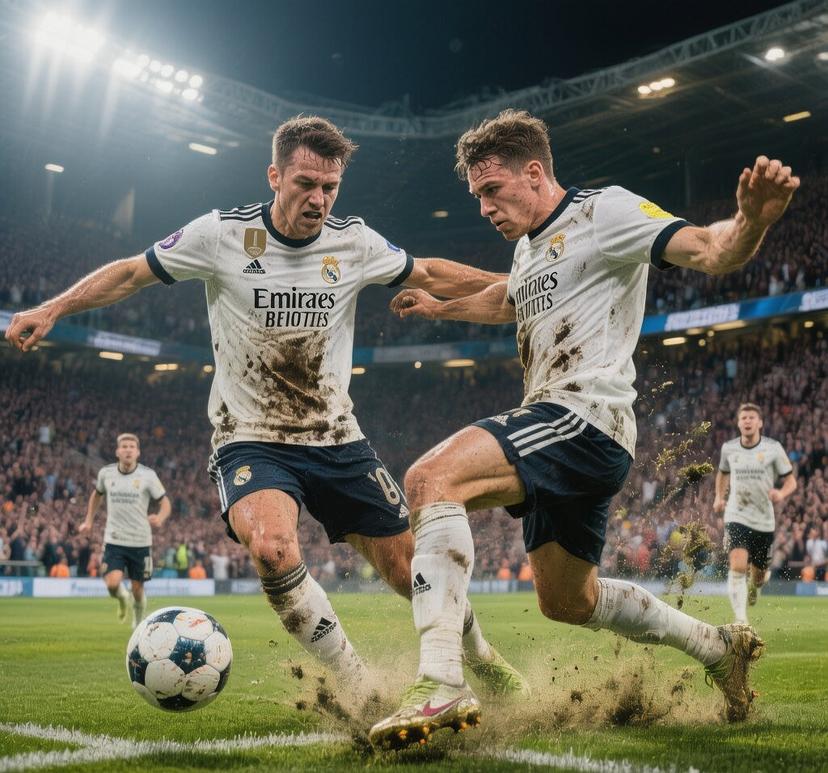
Alonso represents the next generation of tactical thinkers. At Real Madrid, he has blended tactical discipline with adaptive flexibility. While rooted in solid defensive principles and possession control, his teams are capable of swift tactical shifts mid-game, seamlessly transitioning between a possessive 4-3-3 and a more direct approach. This pragmatism and in-game intelligence make his teams exceptionally difficult to predict and defeat.
The New Wave: Slot, Iraola, and Postecoglou
Beyond the established elites, other innovators are leaving their mark. Coaches like Arne Slot at Liverpool, with his high-octane, possession-dominant style, and Andoni Iraola at Bournemouth, known for an aggressive, man-oriented press, are proving that innovative ideas can succeed. Similarly, Ange Postecoglou's relentless, attack-first philosophy has challenged Premier League conventions. The 2026 World Cup will see national teams adopt and adapt these diverse club philosophies on the international stage.
Tactical Battlegrounds: The 2026 World Cup as the Ultimate Test
The 2026 World Cup, spanning from June 11 to July 19 and featuring a record 104 matches, will be the ultimate proving ground for these tactical doctrines . The expanded format, with 12 groups of four, introduces a new "Round of 32" and increases the margin for error, placing a premium on squad depth, adaptability, and tactical consistency over a grueling 39-day tournament .
Key group stage matches will offer fascinating tactical previews :
Group D (USA vs. Paraguay, June 12): The host nation's likely high-energy approach under a modern coach will face a stern defensive test.
Group C (Brazil vs. Morocco, June 13): A classic clash of Brazilian jogo bonito against Morocco's disciplined, counter-attacking defensive block.
Group F (Netherlands vs. Japan, June 14): A battle of two technically gifted teams known for pressing and tactical intelligence.
Group L (England vs. Croatia, June 17): A heavyweight rematch where midfield control and tactical adjustments will be decisive.
The tournament's length and intensity will push managers to their limits. Success will depend not on a single tactic, but on the ability to manage player workload, adapt to different opponents, and implement game-changing substitutions. The team that lifts the trophy at MetLife Stadium on July 19 will likely be the one whose coach best masters this tactical marathon .
A New Tactical Language for a New World Cup
The innovators defining today's game are moving beyond rigid adherence to one system. The future, as seen on the road to 2026, belongs to hybridity and in-game fluidity. We are witnessing the rise of:
The Positional Polymath: Players like Phil Foden or Jamal Musiala, who operate in fluid "zones" rather than fixed positions, blurring the lines between midfielder and winger.
The Tactical Chameleon: Teams that can switch formations seamlessly within a match—from a 4-3-3 in attack to a 5-4-1 in defense—confusing opponents.
Data-Driven In-Game Adjustments: Using real-time analytics to identify tactical weaknesses and make precise substitutions or formation tweaks.
The 2026 World Cup will be a festival of these ideas. It will showcase whether the high-pressing models can endure the North American summer heat, if possession-based systems can break down deep-lying defensive blocks over 104 games, and which innovator can craft the most resilient and adaptable squad.
Follow Every Strategic Move on Camellive
At Camellive, we are passionate about every layer of football's story. As the tactical architects of the game prepare their blueprints for glory in North America, we will be there to bring you unparalleled coverage.
From the key transfers in the January 2026 window that reshape team tactics to every minute of the historic Club Friendly preparations and the epic 2026 FIFA World Cup journey, Camellive is your destination for live scores, in-depth match analysis, and expert insights into the strategies defining modern football .
Witness the future of football tactics unfold. Follow the innovators, analyze the systems, and experience every moment of the beautiful game's next revolution, only on Camellive.