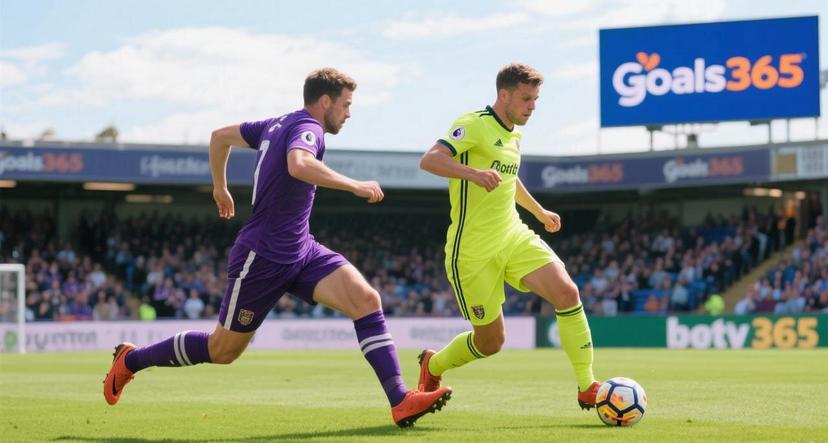
Camel Live Injury Predictor Tool: Navigating the 2026 Football Season

Imagine it’s May 2026. You’re finalising your fantasy squad for the UEFA Champions League knockout stages, and the 2026 FIFA World Cup is just a month away. Do you select that world-class midfielder who has a history of muscle injuries after a congested season? Is the star striker returning from a major knee operation a calculated gamble or a fool’s errand? For the modern football fan, manager, or fantasy enthusiast, these questions define success. Enter the next frontier of football intelligence: the Camel Live Injury Predictor Tool. This isn't about crystal balls; it's about harnessing data, advanced analytics, and machine learning to illuminate the shadow of injury risk that looms over every match, transfer, and draft pick.
Beyond the Headline: What Is an Injury Predictor?
First, let’s be clear. No tool can predict if a player will sprain an ankle in a specific tackle on Tuesday. The true power lies in assessing probabilistic risk. The Camel Live tool moves past simplistic "injury-prone" labels by building a comprehensive model. It analyzes thousands of data points—from a player’s detailed injury history, minute-by-minute workload, and recovery timelines to biomechanical indicators and even fixture congestion.
The output isn't a yes/no answer, but a dynamic risk profile. Think of it as a sophisticated weather forecast for a player's fitness: it cannot tell you the exact moment it will rain, but it can give you a highly reliable percentage chance, helping you prepare accordingly. This allows you to make informed decisions, whether you’re a fantasy manager drafting a squad, a supporter gauging your team’s title chances, or simply a fan wanting to understand the game on a deeper level.
The 2026 Test: Champions League Knockouts and World Cup Dreams
The 2026 football calendar presents the perfect storm where this tool becomes indispensable. Two monumental events converge, stretching player fitness to its limits.
The UEFA Champions League Climax
As of January 2026, the road to the final in Budapest is paved with injury concerns that drastically alter team fortunes. Barcelona’s defence is dealt a severe blow with Andreas Christensen sidelined long-term due to a cruciate ligament injury, with an expected return near the season's end in late April. Meanwhile, Inter Milan’s engine room faces anxiety with key midfielder Hakan Çalhanoğlu battling a calf issue.
This is where the Camel Live tool shifts from abstract to essential. For a club like Bayern Munich, with midfielder João Palhinha listed with a knock, the tool can analyze his specific recovery data and the typical return timeline for such impacts to assess his risk of re-injury in high-pressure quarter-finals. It provides context beyond the simple "expected return" date, offering a data-backed view of a player's readiness.
The 2026 FIFA World Cup: A Data Manager's Nightmare
The unprecedented 48-team World Cup in North America, starting June 11, 2026, is the ultimate fitness puzzle. National team managers must select squads not only based on talent but on durability and recovery capacity. While current squad lists show no injuries, the true challenge begins after a gruelling club season.
Players involved in deep Champions League or domestic league runs in May will have minimal recovery time before the World Cup. The Injury Predictor Tool can model this accumulated fatigue, calculating the elevated risk for players with high competitive minutes. It can answer critical questions: Is it riskier to select a 34-year-old superstar with a clean bill of health but heavy minutes, or a younger alternative with a recent minor hamstring issue but a lighter load?
Key Players and the Risk Equation for 2026
Let’s apply this logic to hypothetical scenarios for the coming summer, focusing on players whose 2026 fortunes could be significantly influenced by injury risk factors.
| Player | Team | 2026 Highlight | Injury Risk Context | Tool's Potential Insight |
|---|---|---|---|---|
| A returning superstar | Various | Comeback for World Cup | Returning from ACL/Major surgery (e.g., similar to Gavi's knee injury timeline). | Analyzes medical milestone data vs. aggressive calendar to gauge re-injury risk. |
| The minutes-heavy core | Top Club & Country | UCL & World Cup double | Extreme fixture congestion from a 60+ game season. | Models fatigue accumulation and identifies "overload" red flags before a breakdown occurs. |
| The chronic manageee | Various | Key tournament role | History of recurrent muscular issues (e.g., hamstring). | Evaluates if current management & rest periods sufficiently mitigate known risk patterns. |
The Future of Football Intelligence
Tools like the Camel Live Injury Predictor represent a paradigm shift. They democratize access to the kind of sophisticated analysis that top clubs employ. As one fantasy sports analyst noted, while we cannot be "Johnny Fortuneteller," the key is to use the best available information to understand context and likelihood. This tool provides exactly that—moving from gut feeling to guided insight.
For the 2026 fan, this means a richer, more strategic engagement with the sport. You’re no longer blindsided by a last-minute lineup change; you’ve already assessed its probability. Your fantasy drafts and prediction leagues are built on pillars of data, not just reputation. As the lines between sports science and fan experience continue to blur, the ability to understand and navigate injury risk will become a fundamental part of the beautiful game. The season ahead is long, and the stakes have never been higher. Prepare with more than hope; prepare with intelligence.